


Waha - Video Chat & Party
4.2970.00 Reviews
App Specs
- Version
- 10.1.00
- Updated On
- License
- Free
- Downloads
- 5,000,000+
- Developer
- INCHI Technology Limited
- Categories
- Entertainment
- Platform
- Android
Screenshots


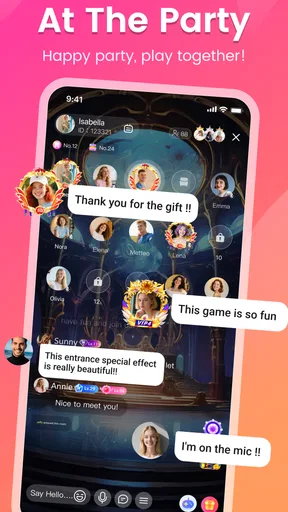


 Analysis by AppCompare
I approached Waha - Video Chat & Party as an entertainment app for people who want to meet others rather than simply watch something alone. Its basic idea is easy to understand: open a social space, look for interesting people, and decide whether a conversation feels worth continuing. That simplicity is part of the appeal, but it also means the experience depends heavily on how comfortable you are with spontaneous interaction.
Waha is made by INCHI Technology Limited and is available free of charge. It sits in the mature-audience part of the app world, with an age rating of Mature 17+, so I would not treat it as a casual children’s chat app. The listing describes it as a place to make friends and meet interesting people, and that is the right way to think about it: this is not a messaging utility for people you already know, but an entertainment-focused social app built around meeting strangers.
After spending time considering how it fits into everyday use, I think its strongest quality is immediacy. There is less ceremony than with a traditional social network. You are not necessarily building a public profile, collecting posts, or waiting for a friend request before anything happens. The trade-off is that the same open-ended design can feel unpredictable, and users need to bring their own boundaries, patience, and judgment.
How the free experience creates value
The most important cost detail is straightforward: the app itself is free to download. That makes it easy to try without committing money first, which matters for an app whose value is personal and social rather than guaranteed. A video-chat service cannot promise that every conversation will be memorable, so free access gives you a reasonable way to discover whether the atmosphere suits you.
There are in-app purchases ranging from $0.49 to $124.99 per item. I would separate that paid layer from the free entry point. Someone can explore the app without paying, while users who choose purchases should think carefully about what they are receiving and whether it improves their actual experience. The existence of a wide purchase range is a reason to avoid treating every visible paid option as necessary.
For me, the practical value of the free route is experimentation. I could imagine opening Waha during a quiet evening, browsing the social environment, and seeing whether live interaction feels more engaging than scrolling through short videos. It can also be useful when you want a low-pressure way to talk with people outside your normal circle. That value is not the same as the value of a paid subscription or a conventional dating service; it comes from access to possible conversations, not from a promised result.
I would not install it expecting a guaranteed number of meaningful friendships. The app can put people in the same social space, but it cannot make both sides interesting, respectful, or available at the same time. That distinction is important when judging whether any optional purchase is worthwhile. If you are already enjoying the free experience, a paid item may feel like a personal choice. If the conversations are not working for you, spending more is unlikely to solve the underlying mismatch.
Worth Reading Before You Choose

EA SPORTS FC Mobile 26 Is a Bigger Football Game, but It Takes Time

Flipboard Shows What News Apps Must Do Beyond the Feed

Switching to Android Auto Means Rethinking Your Driving Routine

Google Calendar Makes a Crowded Week Easier to Manage

Ludo King Makes the Most of the Minutes Between Plans

Baby Panda World Brings Quick Play to Modern Phones, but Its Game Library Feels Busy
The current version is 10.1.00, and the app supports devices running Android 7.0 or later. That broad compatibility makes it approachable for people who are not using a recent phone, although the quality of any video conversation will still depend on the device, connection, and other conditions around the call. I would check that your phone handles live communication comfortably before deciding that every rough moment is the app’s fault.
What the social format feels like in practice
Waha’s format is more active than a standard text-based community. Video chat asks for attention in the moment, and that can make a short conversation feel more personal than a series of comments. You have to decide quickly whether to stay engaged, move on, or end the interaction. For someone who likes spontaneous contact, that immediacy is the main reason to choose this kind of entertainment app.
It is also a less predictable format than familiar alternatives. A messaging app such as WhatsApp is usually centered on people already in your contacts. A large social network lets you consume posts at your own pace. A video platform gives you control over what to watch. Waha occupies a different space: it is closer to entering a room where new conversations may happen, rather than selecting a finished piece of content.
That comparison explains both the attraction and the friction. If I want control, quiet, and predictable content, I would choose a streaming app or a text messenger. If I want the possibility of an unexpected exchange and do not mind leaving conversations quickly, Waha makes more sense. It is not automatically better than those alternatives; it serves a different mood.
Three ways I would use it without wasting time
My first practical tip would be to use it with a clear time boundary. Social discovery apps can turn a five-minute check into an unplanned long session because every new person creates another possibility. Setting a stopping point before opening the app helps me judge whether I am genuinely enjoying the conversations or merely continuing out of habit.
Second, I would treat the first interaction as a screening step, not as an obligation. A friendly opening does not mean I have to share personal information, move the conversation elsewhere, or keep talking when the tone changes. The useful workflow is simple: begin lightly, notice how the other person responds to boundaries, and leave early if the exchange feels uncomfortable. That approach is especially important in a mature-rated environment.
Third, I would avoid judging the whole app from one quiet session. The value of a people-driven service varies with the time you use it, the kind of interaction you want, and your willingness to try more than one conversation. At the same time, I would not keep forcing it for days if the format consistently makes me feel tense or bored. Free access makes a short trial sensible, but it does not create an obligation to persist.
The compromises that matter most
The biggest limitation is the uncertainty built into meeting strangers. A polished interface cannot guarantee that every participant is genuine, considerate, or compatible with you. I would keep identifying details private and avoid assuming that a pleasant video conversation automatically makes someone trustworthy. The mature age rating is a reminder to approach the app with adult judgment, not to treat it as a protected family environment.
Another trade-off is emotional energy. Video chat requires more involvement than silently watching clips. On a good day, that makes the interaction feel lively. On a tired day, it can feel like work, especially when a conversation does not develop naturally. Waha is therefore a poor fit for someone who wants entertainment that can run in the background while they do something else.
There is also a difference between meeting people and building lasting relationships. Waha may help start an exchange, but friendship requires repeated contact, shared interests, and mutual effort afterward. I would choose a more structured community if I were looking for a hobby group, professional networking, or a carefully filtered dating experience. Those services usually organize people around a clearer purpose, while Waha’s open social approach leaves more of the work to the user.
Paid options introduce another decision point. Because purchases can be as little as $0.49 and as much as $124.99 for an item, I would pay attention before confirming anything and decide in advance what amount, if any, feels reasonable. Free access is enough to discover whether the format suits you. I would only consider spending after identifying a specific benefit that matters to my use, rather than buying simply because a prompt appears during an exciting conversation.
That is where the difference between free access and paid value becomes especially important. The free experience can answer the central question: do I enjoy meeting people this way? A purchase cannot answer it for me. If the answer is no, the sensible choice is to stop using the app. If the answer is yes, I would still evaluate each optional item on its own instead of assuming that higher spending produces better conversations.
Who is likely to get the most from it?
I see Waha working best for adults who enjoy unscripted social contact and can handle conversations that end quickly. It may suit someone who has moved to a new place, wants a change from familiar feeds, or simply likes discovering personalities outside their usual circle. The app’s entertainment value comes from interaction itself, so curiosity and a relaxed attitude are more useful than a rigid expectation of what every session should deliver.
It can also suit people who dislike the formality of traditional dating platforms but still want to talk with new people. That does not make it a dating app in my mind, and I would not use it with the assumption that every person has the same goal. The safer expectation is broad social discovery. If a conversation develops into a friendship, that is a welcome result rather than something I would demand from the service.
I would recommend skipping it if you are under the mature age threshold, uncomfortable with video interaction, or looking for a tightly moderated space built around a specific interest. I would also skip it if you need guaranteed privacy, a fully controlled audience, or an entirely asynchronous experience. A text-first platform may be better when you want time to compose replies, while a focused forum may be better when the subject matters more than meeting random people.
One realistic scenario shows the difference. Imagine finishing work with an hour to spare and wanting human contact without arranging a formal call with friends. Waha could fill that gap with casual conversations, but I would open it with a purpose: try a few interactions, keep personal details general, and leave once the experience stops being enjoyable. If I instead needed help with a technical problem or wanted to catch up with someone I trust, I would use a dedicated messenger or community, because Waha would add uncertainty without offering a clear advantage.
My verdict on trying or skipping Waha
The app has a solid reason to exist: it makes spontaneous social discovery more immediate than ordinary feeds and less familiar than a contact-based messenger. Its free availability lowers the risk of testing that idea, and the mature rating clearly signals that it belongs in an adult context. With a 4.2 average from around 58 thousand ratings and more than 5 million installs, it has attracted a substantial audience, although popularity alone does not guarantee that its social style will suit every person.
I would recommend trying it if you genuinely want live conversations with new people and are willing to manage the experience yourself. Start free, keep expectations realistic, and use firm personal boundaries. I would not recommend buying anything during your first session. Give the free side enough time to show whether you enjoy the atmosphere, then consider an optional purchase only when you understand exactly why it would add value for you.
My final view is positive but selective. Waha is worth trying for curious adults who value possibility over predictability. It is not the right choice for controlled communication, specialist communities, or passive entertainment. The app can create an opening for a good conversation, but the quality of that moment depends on the people involved and on how carefully you use the platform. For me, that makes the free trial worthwhile; it does not make paid spending automatically worthwhile.
Pros
- Easy-to-use interface for quickly joining video chat rooms.
- A lively party-chat format makes meeting new people feel spontaneous.
- Supports real-time interaction instead of relying only on text messages.
- Useful for casual socializing when you want short
- entertaining conversations.
- Frequent room activity can make it easy to find people online.
Cons
- Conversations may feel unpredictable because you interact with strangers.
- Video chat can consume significant mobile data and battery power.
- The experience may depend heavily on the number of active users.
- Public rooms can sometimes become noisy or difficult to follow.
- Users should review privacy settings before sharing personal information.
FAQs for Waha - Video Chat & Party
What is Waha - Video Chat & Party?
Waha - Video Chat & Party is a social entertainment app focused on meeting people through live video conversations, group rooms, and party-style interactions. Users can browse available social spaces, join conversations, and communicate with others using video, voice, or chat features, depending on the room and account settings. The experience is designed for casual socializing rather than private messaging alone.
Is Waha - Video Chat & Party free to download and use?
The app can generally be downloaded without an upfront purchase, but some features may require in-app purchases, virtual coins, gifts, subscriptions, or other paid options. These extras can unlock additional interaction tools or improve visibility within the community. Before spending money, review the pricing shown in the app store and inside Waha, and check whether purchases are recurring or one-time.
Do I need to create an account to use Waha?
An account is normally required for the main social functions, such as creating a profile, joining interactive rooms, communicating with other users, and keeping activity connected across sessions. Registration may involve a phone number, email address, or a supported social login. You should use accurate information where required, choose a strong password, and review the permissions requested during setup.
Is Waha - Video Chat & Party safe for everyone?
Because Waha is built around live communication with people you may not know, users should approach it with the same caution used on other social video platforms. Avoid sharing your address, financial details, passwords, or private documents, and block or report suspicious behavior. Parents should also check the app’s age rating, privacy settings, and community guidelines before allowing younger users to access it.
What should I check before downloading and using the app?
Before installing Waha, check that your Android or iOS device meets the current compatibility requirements and has enough storage for the app and its updates. A stable internet connection is important because video rooms can use considerable mobile data and battery power. Also review the privacy policy, camera and microphone permissions, notification settings, age requirements, and in-app purchase controls.


